
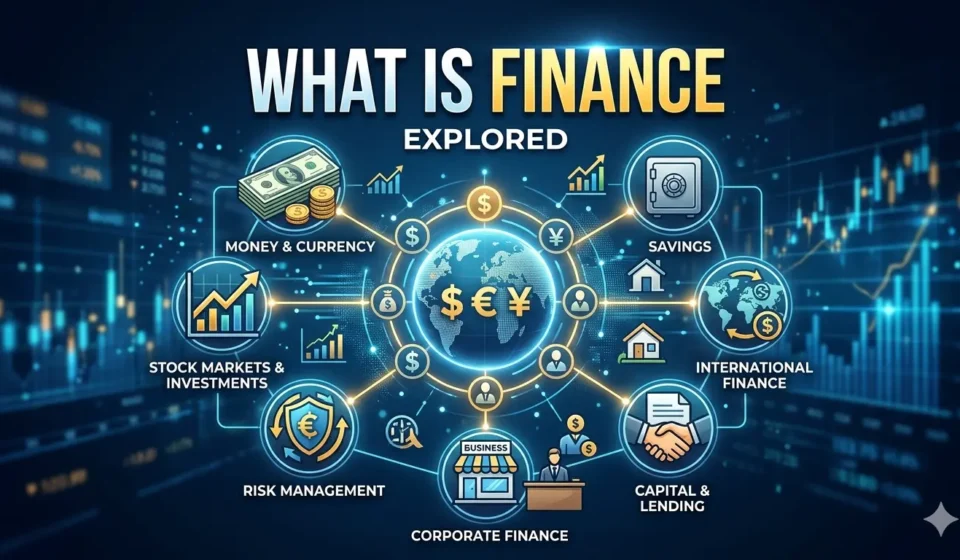

Money touches everything. Your daily choices. Your stress levels. Your future plans. Yet most people feel confused when they hear the word finance. Let’s fix that. No jargon. No robotic talk. Just real clarity.
Finance is not just about big corporations or banks. It is about how money is earned, managed, and used over time. It is about control. And sometimes, survival. When you understand finance, you stop guessing. You start making decisions with confidence.
The Simple Meaning of Finance
At its core, finance is the way money flows. It covers earning money. It includes spending it wisely. It also means saving and investing for the future. Think of finance like a system. A system that helps people and businesses survive and grow.
This system includes the organization of finance, which explains how money-related tasks are structured. It also includes the finance process, which is how decisions about money are made step by step. From paying bills to managing a company budget, everything falls under finance.
Why Finance Feels So Complicated
Finance scares people. Not because it is impossible. But because it is often explained badly. Many people grow up without learning about money. No one teaches them budgeting. No one explains how debt works. So when real life hits, confusion starts.
Real Life Scenario
A young professional gets their first salary. They feel excited. They start spending freely. Months later, savings are zero. This is not carelessness. This is lack of financial awareness. That is why understanding the finance process matters.
The Organization of Finance Explained
Every system needs structure. Finance is no different. The organization of finance refers to how financial activities are arranged and controlled. In simple terms, it answers this question. Who handles money, and how?
In Personal Life
You are your own finance department. You decide income, expenses, and savings. If you ignore structure, money slips away.
In Businesses
Things get more serious. Companies build full finance departments to manage money. These departments handle budgeting, planning, risk, and reporting. Without them, businesses fail quickly.
Finance Departments: The Backbone of Stability
Every strong company relies on its finance team. The finance departments are responsible for keeping things balanced. They track income and expenses. They make sure the company stays profitable. They also plan for future growth.
What Happens Without a Finance Department
Chaos. Expenses go unchecked. Investments become risky. Cash flow problems start showing up. Even small businesses need basic financial structure.
The Finance Process: How Decisions Are Made
Now let’s talk about action. The finance process is how money decisions happen step by step. It usually starts with planning. Then comes budgeting. After that, execution and monitoring.
A Simple Breakdown
You earn money.
You plan how to use it.
You track where it goes.
You adjust based on results.
This cycle repeats constantly.
Why This Matters
Without a process, money disappears. With a process, money grows.
Finance Operations: The Daily Engine
If finance is a system, operations are the engine. Finance operation includes all daily money activities. This includes payments, billing, payroll, and record keeping.
Small Example
Paying electricity bills is a finance operation. Managing employee salaries is also one. These tasks may seem small. But together, they keep everything running smoothly.
Types of Finance You Should Know
Finance is not one single thing. It has different branches.
Personal Finance
This is your daily life money. Savings, expenses, loans, and investments.
Business Finance
Used by companies. Focuses on growth, profit, and sustainability.
Public Finance
This involves government money. Taxes, public spending, and policies. If you have ever wondered about public spending, that falls under what is public finance definition.
Quant Finance
This is more technical. It uses math and data for financial decisions. Often used in stock markets and trading systems.
Financial Resources Meaning in Real Life
Money is not the only resource. The financial resources meaning includes assets like cash, investments, and credit. These resources help individuals and businesses survive tough times.
Example
A person with savings can handle emergencies better. A business with strong reserves can survive market crashes. Resources give security. And security reduces stress.
Finance in Marketing and Growth
Money plays a big role in marketing. The definition of financing in marketing relates to how funds are used to promote products.
Businesses invest money into ads, campaigns, and branding. If done right, returns are higher than costs. If done wrong, losses pile up. This is where financial planning becomes critical.
National Finance Systems and Big Decisions
At a larger level, finance shapes entire countries. For example, what is national finance commission relates to how funds are distributed within a country. These decisions impact development, infrastructure, and public services. So finance is not just personal. It shapes societies.
The Emotional Side of Finance
Finance is not just numbers. It is deeply emotional. People feel stress when money is tight.
They feel relief when savings grow.
Common Feelings Around Money
Fear of losing income. Guilt after overspending. Anxiety about the future. Understanding finance reduces these emotions. You gain control. And control brings peace.
Cost of Ignoring Finance
Ignoring finance has consequences. Small mistakes turn into big problems.
Real Consequences
Debt builds up slowly. Savings disappear faster than expected. Opportunities get missed. People often delay financial decisions. But delay increases risk.
Smart Financial Behavior That Works
You do not need to be an expert. You just need awareness. Start tracking your money. Understand your income and expenses. Make small improvements over time. Consistency matters more than perfection.
Long Term Impact of Financial Awareness
Good financial habits change lives. Over time, savings grow. Investments start generating returns. You stop living paycheck to paycheck.
A Clear Shift
From stress to stability. From confusion to clarity. That is the real power of finance.
When to Take Financial Action
Many people wait too long. They think they will “figure it out later.” But later becomes too late. Start now. Even small steps matter.
Expert Insight: What Most People Miss
Most articles talk about theory. But real life is different. People struggle with discipline, not knowledge. They know they should save. But they do not follow through. This is where mindset matters. Treat money like a responsibility. Not a temporary tool.
Connecting Finance to Bigger Goals
Finance is not the final goal. It supports your life goals. Buying a house. Starting a business. Traveling freely. All these depend on financial planning.
Final Thoughts: Take Back Control
Finance is not as complex as it looks. It is about structure, awareness, and consistency. Understand the organization of finance. Follow a simple finance process. Respect the role of finance departments. Stay active in daily finance operation. That is how control begins. And once you have control, everything changes.