
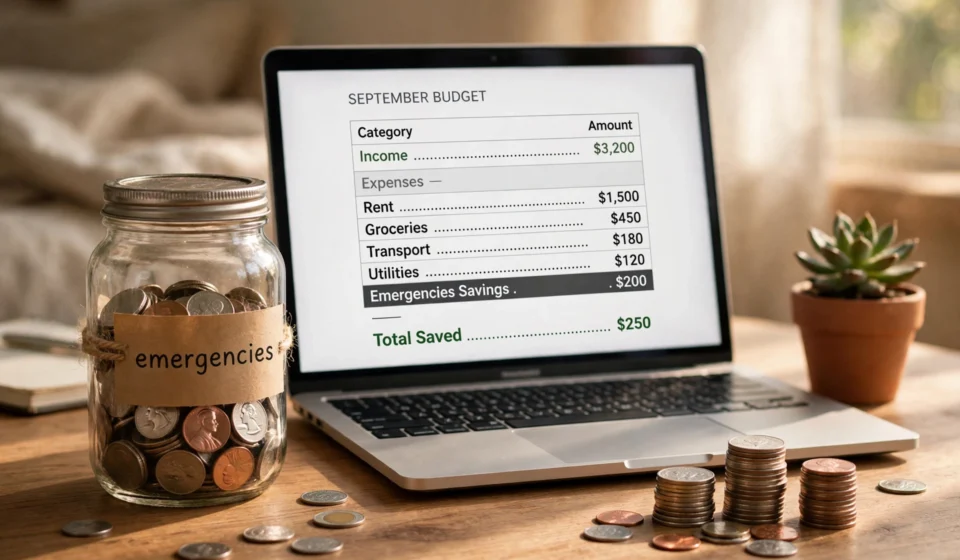

An emergency fund is money set aside for costs you did not plan for, kept where you can reach it fast. It is not a vacation fund, a new phone fund, or an investment account. It is the buffer that stops one bad week from turning into credit card debt. A car repair, a medical bill, a broken water heater, or a gap between jobs all fit. A holiday sale does not.
The Consumer Financial Protection Bureau (CFPB) describes an emergency fund as a cash reserve set aside for unplanned expenses or financial emergencies, such as car repairs, home repairs, medical bills, or a loss of income. That definition is a good test for every withdrawal. Ask three questions before you touch the money: was it unexpected, is it necessary, and is it urgent? If the answer to all three is yes, it is a fair use. If not, it belongs in a different savings pot. See the CFPB guide, An essential guide to building an emergency fund.
How Much Emergency Fund Do You Need?
The usual starting point in the USA is three to six months of essential expenses, not three to six months of income. Essential expenses are the bills that keep coming even if your income stops: rent or mortgage, utilities, groceries, insurance, minimum debt payments, and basic transport. Leave out dining out, streaming, subscriptions you can pause, and other spending you could cut in a tight month.
Work it out with your own numbers. Add up one month of essentials, then multiply.
- Essentials of $2,500 a month: three months is $7,500, six months is $15,000.
- Essentials of $3,500 a month: three months is $10,500, six months is $21,000.
- Essentials of $5,000 a month: three months is $15,000, six months is $30,000.
The range is wide on purpose, because households face different risks. Aim toward three months if you have a stable job, two incomes, and good health cover. Aim toward six months, or more, if you are the only earner, you are self-employed or freelance, your hours vary, or your industry is prone to layoffs. Freelancers and single-income households often need the larger end, because a lost client or a slow month can cut income to zero at once.
If the full target feels out of reach, do not let it stop you from starting. A starter fund of $1,000, or one month of essentials if that is smaller, already changes the next surprise. Without any cushion, a $600 repair goes straight on a card and starts interest charges. With a starter fund, the same repair is an annoyance, not a debt spiral. Build the starter fund first, then work toward three months, then six.
Emergency Fund vs Retirement Savings
Keep these two jobs separate. Retirement money, such as a Roth IRA or a 401(k), is for decades from now, and early withdrawals can bring tax and penalties. An emergency fund is for this year. Raiding retirement savings for a car repair costs you twice: the tax or penalty now, and the growth that money would have earned over decades.
That order matters when you are building both. Read our guide to Roth IRA Explained: How It Works, Limits and Who Should Open One for the retirement side, and keep the emergency fund in cash, not in stocks. The fund is not meant to grow fast. It is meant to be there, in full, on the day you need it.
The same logic applies to workplace saving. If your employer matches 401(k) contributions, taking the match still comes first in most cases, because it is an instant return you cannot get elsewhere. Our comparison, 401(k) vs IRA: Which Retirement Account Should You Open First?, walks through that order. After the match, a starter emergency fund is usually the next priority, before extra retirement contributions or extra debt payments beyond the minimums.
Where to Keep an Emergency Fund
Where you keep it matters almost as much as how much you save. The money must be safe, easy to reach within a day or two, and out of the way of everyday spending. A separate savings account at a bank or credit union meets all three tests. It is insured, it does not swing in value like stocks, and keeping it in a different account from your checking makes it harder to spend by accident.
A high-yield savings account is a common choice, because it pays more interest than a standard savings account while keeping the money accessible. Check that the account has no withdrawal penalty, no minimum balance fee that eats your interest, and a transfer time you can live with. Same-day or next-day transfers to your checking account are ideal. Some people keep one month of essentials in their regular bank for same-day access, and the rest in a higher-yield account. That split is fine, as long as you can reach the whole fund quickly in a real emergency.
Do not keep the fund in stocks, crypto, or a retirement account. Markets fall at the worst times, often when jobs are also at risk, and selling investments in a dip locks in a loss. Do not keep a large amount in cash at home either. It earns nothing, it is not insured, and it can be lost or stolen. A small cash amount for a power cut or a bank outage is sensible; the whole fund is not.
How to Build It, Step by Step
- List one month of essential expenses only, using last month’s bank statements, not guesses.
- Multiply by three for your first full target, and note the six-month figure as your stretch target.
- Open a separate savings account if you do not have one, and name it Emergency Fund so its purpose is clear.
- Set an automatic transfer for the day after payday, even if it starts at $25 or $50 a week. Automatic saving beats willpower, because the money moves before you can spend it.
- Send windfalls straight to the fund before they reach your checking account: tax refunds, bonuses, cashback, and money from selling items you no longer need.
- After every withdrawal, rebuild the fund before you restart other savings goals. A half-empty fund is a half-finished job.
- Review the target twice a year, or after a move, a pay change, or a new child, because your essentials change and the old target may no longer fit.
If you are also paying off high-interest debt, the order needs care. The common approach is: build a $1,000 starter fund, then put extra money toward the highest-interest card, then return to the fund and build it to three to six months. That way the next surprise does not go back on the card and undo your progress. Our guide to building credit covers the credit side.
What Counts as an Emergency, and What Does Not?
Counts: job loss or reduced hours, an urgent medical or dental bill, a car repair you need to get to work, a home repair that cannot wait, such as a burst pipe, and urgent travel for a family emergency.
Does not count: a holiday, a sale, a new phone while the old one works, routine car maintenance you could have planned for, or a gift. Those need their own sinking funds, small monthly amounts set aside for known costs. Mixing them into the emergency fund is how the fund ends up empty when a real emergency arrives.
If you are self-employed, add one more layer. Keep business costs separate from this personal fund, and keep a small business buffer of its own for slow months and tax bills. Our guide to quarterly taxes for LLC owners covers the dates and forms that catch many new business owners out, and our finance basics guide explains how money is earned, managed, and used in plain terms.
Related Reading
- Roth IRA Explained: How It Works, Limits and Who Should Open One
- 401(k) vs IRA: Which Retirement Account Should You Open First?
- How to Build Credit Fast in the USA
- What Is Finance?
- How to Make Money Online for Beginners
How much should I have in an emergency fund?
A common target is three to six months of essential expenses, not income. Start with $1,000 or one month of essentials, then build to three months, then six.
Where should I keep my emergency fund?
In a separate, insured savings account at a bank or credit union, ideally a high-yield savings account with no withdrawal penalty, so the money is safe and reachable within a day or two.
Should I build an emergency fund before paying off debt?
Build a small starter fund of about $1,000 first, then focus extra money on high-interest debt, then return to the fund and build it to three to six months of essentials.
Can I use my emergency fund for a holiday or a sale?
No. Those are planned costs and belong in separate sinking funds. The emergency fund is only for costs that are unexpected, necessary, and urgent.
Is 3 months enough, or do I need 6 months?
Three months suits stable, dual-income households. Six months or more suits single earners, freelancers, variable hours, and households with high fixed costs or a slow-to-replace income.
Disclaimer: This article is general education, not financial advice. Savings rates, account terms, and tax rules change, so check your bank’s current terms and speak to a qualified financial professional before making decisions about your savings.